Views: 0 Author: Site Editor Publish Time: 2026-08-25 Origin: Site
In fiber optic access network (FTTH/FTTx) deployments, the selection of appropriate terminal equipment directly impacts network costs, deployment efficiency, and equipment integration. Although both serve as Optical Network Units in PON networks, responsible for converting optical signals to electrical signals, they differ fundamentally in their architectural design, deployment scenarios, and operation and maintenance costs.
Quick Overview of Core Concepts
SFP ONU Stick: Integrates the functionality of a complete Optical Network Unit (ONU) into a small, pluggable (SFP/SFP+) module. Simply plug it into a router, switch, or firewall with an SFP interface to enable third-party devices to directly access GPON/EPON fiber optic networks.
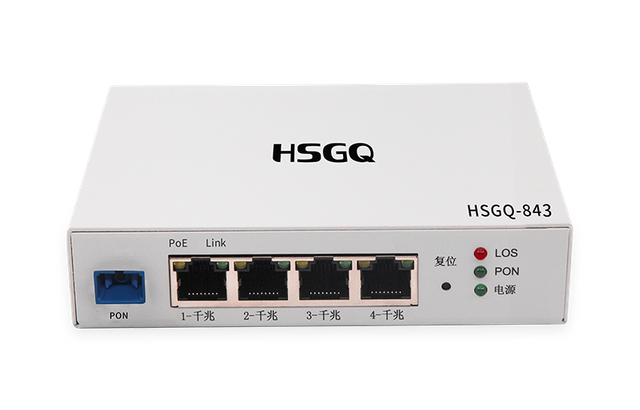
Standard ONU/ONT: A standalone box-type network terminal device, typically equipped with an independent power adapter, multiple Ethernet LAN ports, and some models also integrate Wi-Fi and VoIP voice interfaces.
In-depth Analysis of Core Differences
1. Hardware Form Factor and Device Integration
Standard ONU/ONT: Operates as a standalone device, internally containing a PON optical transceiver module, main control CPU, multi-port switching chip, and optional Wi-Fi module. It requires dedicated placement space and a dedicated power adapter.
SFP ONU Stick: Miniaturizes the complete ONU core functionality into a standard SFP/SFP+ module. It has no extra casing or independent power interface; its power is directly supplied by the SFP slot of the host device (such as a switch or router).
2. Network Topology and Device Decoupling
Traditional Architecture (Standard ONT): Fiber Optic - Optical Modem (ONT) - Network Cable - Enterprise Router/Firewall. This model introduces additional points of failure and network cable conversion attenuation.
Simplified Architecture (SFP Stick): Fiber Optic - SFP ONU Stick (directly inserted into the SFP port of the router/firewall). Eliminates the need for a separate optical modem, allowing fiber optic cables to be directly connected to the rack router, greatly simplifying the network topology.
3. Operation and Maintenance & Flexible Expansion
The SFP ONU stick provides the system with extremely high flexibility. When PON technology is upgraded from GPON to 10G-PON (XGS-PON), maintenance personnel do not need to replace the entire enterprise router; they can complete the upgrade simply by hot-swapping the SFP module, greatly reducing long-term CAPEX (capital expenditure).
Typical Application Scenarios and Selection Recommendations
Scenarios for Choosing SFP ONU Sticks:
Enterprise Gateway and Router Integration: For those who want to avoid stacking too many optical modem devices in the data center and pursue "one-stop" management.
Security Monitoring and Intelligent Transportation: Cameras or outdoor switches with built-in SFP ports can be directly plugged into SFP sticks to connect to the PON transmission network.
Option 1: Simplified Enterprise/Industrial Access Solution Based on SFP ONU Sticks (Direct Fiber Connection)
This solution eliminates the redundancy of traditional "standalone optical modems" by directly integrating PON fiber access capabilities into enterprise-grade routing devices or industrial terminals.
Corporate Headquarters/Branch Offices (SD-WAN/Router Integration):
Architecture: Fiber optic cables are directly plugged into the SFP ports of the enterprise core router or SD-WAN gateway.
Advantages: No need for external optical modems and power cables, saving rack space; reduces network hops and cable conversions, lowering data forwarding latency.
Security Monitoring and Intelligent Transportation (Outdoor Access):
Architecture: Industrial-grade SFP ONU sticks are directly inserted into outdoor industrial switches or high-precision cameras (with SFP slots).
Advantages: No need to install optical modems and power adapters in outdoor protective boxes, improving overall dustproof, waterproof, and high/low temperature resistance.
Core Value of the Solution:
Physical Redundancy Reduction: Reduces device nodes, lowers failure rates, and simplifies rack management.
Smooth upgrade: When upgrading the network from GPON to XGS-PON, only the SFP module needs to be replaced, without replacing the front-end main router.
Option 2: Full-Service Home/SOHO Coverage Solution Based on Standard Box-Type ONU/ONT
This solution revolves around "multi-functional integration," using the ONT as the core to provide full-service coverage for voice, TV, wireless, and wired networks after fiber optic internet access.
Typical Deployment Scenarios
FTTH Residential Broadband Access:
Architecture: Fiber optic internet access to the ONT, utilizing the ONT's built-in Wi-Fi module to provide whole-house wireless coverage. LAN ports connect to IPTV set-top boxes, and POTS ports connect to traditional telephones.
Advantages: Out of the box, a single device can meet the triple-play (Data + Voice + IPTV) needs of a home.
SOHO Office/Street-front Store:
Architecture: The ONT is placed on the desktop, with multiple LAN ports directly connecting to office computers, POS machines, printers, and other devices.
Advantages: No need for additional network switches or routers, reducing initial networking costs.
Core Value of the Solution
Highly Integrated Functions: Integrates photoelectric conversion, routing, switching, Wi-Fi, and voice functions into one unit.
Extremely Low Deployment Threshold: Complies with traditional operator standard cabling deployment processes, with a clear maintenance interface.
5G Simplified Micro Base Station/Edge Computing Node: Space-constrained, requiring extremely high integration and low power consumption.
Scenarios for Choosing Ordinary ONUs/ONTs:
FTTH Residential Broadband: Requires an integrated terminal that directly provides users with Wi-Fi, IPTV, and VoIP telephone interfaces.
Small SOHO Offices: Lacks dedicated rack equipment, requiring multiple LAN ports for direct connection to computers and printers.
Summary: Ordinary ONUs/ONTs focus on "multi-functional access and terminal coverage," while SFP ONU sticks focus on "high integration, device decoupling, and simplified network architecture." As enterprise networks evolve towards high bandwidth and redundancy reduction, SFP ONU sticks have become the mainstream choice in the B2B market and professional network deployments.