Hotels and apartments require high-quality networks for smart hotel business, requiring high-speed broadband access, integrating broadband, voice, video, and monitoring. Panoramic networks require space saving, flexible wiring, and green energy conservation.

Power over Fiber is a technology that uses lasers to transmit electrical energy through fiber optic cables and converts it back to electrical energy at the destination. It provides complete electrical isolation, complete immunity to electromagnetic interference (EMI), and a safe, lightweight, non-conductive power supply for sensors or remote devices. HSGQ's PoF solution for hotel networks is designed with a centralized optical access architecture. It addresses the challenges of terminal power supply in extremely long distances, environments without power access points, or high EMI environments by transmitting data and power through a hybrid optical-electrical PoF cable, allowing a single cable to provide power simultaneously.
Specifically for hotel environments, our PoF solution uses a "hybrid optical-electrical cable" to centrally deliver power and data to each room, perfectly solving the pain points of traditional hotel networks where "each room needs its own power supply" and "overcrowded low-voltage equipment" are problems.
1. Central Office Layer
This is the heart of the entire hotel, responsible for unified management and power supply.
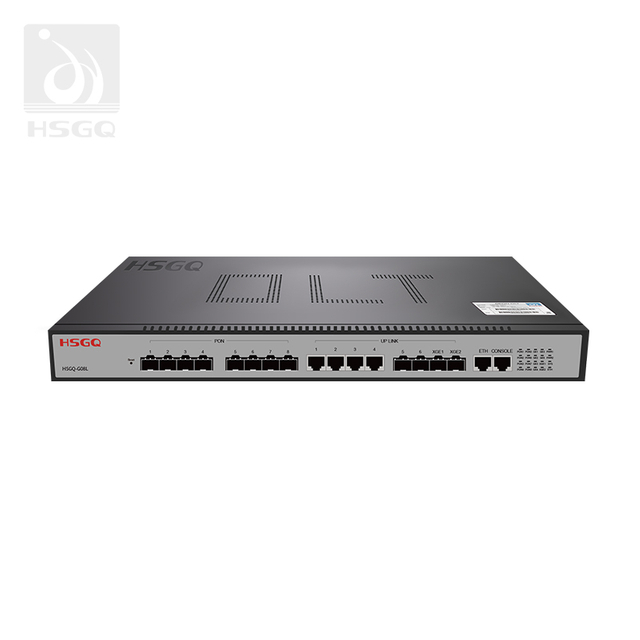
Core Equipment: HSGQ OLT (such as 16*port GPON) + Central DC Power Source.
Connection Method: The OLT's fiber optic output and the remote power supply's DC output are connected via an optoelectronic combiner or directly to an optoelectronic composite patch panel.
Advantages: All room power switches are centralized in the server room, facilitating unified maintenance and UPS backup. Even during power outages, the hotel network can continue operating via the server room's batteries.
2. Vertical/Horizontal Cabling Layer
From the server room to each floor, and then to each room.
Transmission Medium: Optical composite cable.
Splitting Architecture: Optical composite splitter boxes are deployed in the floor's low-voltage room.
Circuit: Parallel branching distributes power to each branch of the composite cable.
Features: The floor's low-voltage room becomes "passive," eliminating the need for air conditioning and lightning protection grounding, significantly saving space and electricity costs.
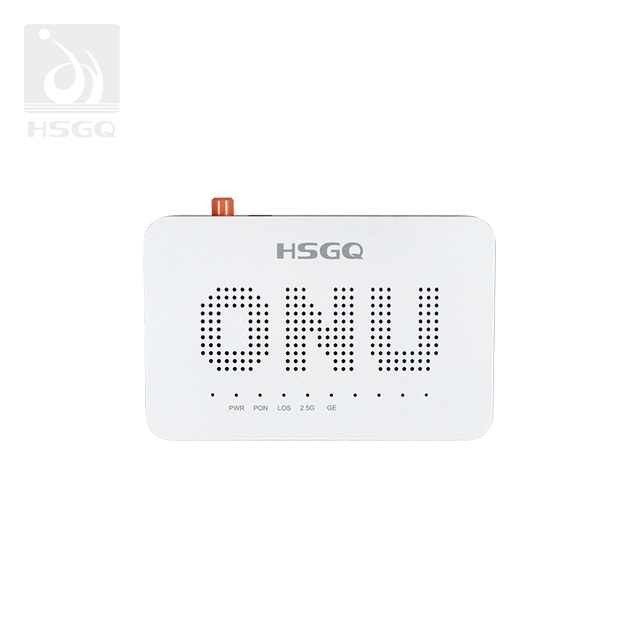
3. Guest Room Terminal Layer: Terminal equipment is deployed directly in the guest rooms. Core Equipment: HSGQ PoF ONU (Powered Panel AP/ONU).
Access Method: The fiber optic composite cable is directly connected to the ONU's composite interface.
Functions:
The ONU automatically extracts power from the composite cable, eliminating the need for a power adapter.
The ONU provides high-speed Wi-Fi 6, IPTV, and a wired network port.
Intelligent Identification: Supports power outage protection to ensure no leakage of high-voltage electricity and guarantee guest safety.
Comparison of the advantages of the solutions
| Features | Traditional Hotel Network (Switch + Network Cable) | HSGQ PoF Solution |
| Power supply | Each room requires a wall power outlet | Centralized power supply in the server room; no need for individual room power outlets |
| Space occupation | The building requires a large low-voltage electrical cabinet and air conditioning for cooling | A passive low-voltage electrical room is needed, requiring only a small optical splitter box |
| Safety | AC power supply to the building poses a risk of leakage | Low-voltage DC power supply from a distance, with load detection |
| Maintainability | Power supply faults need to be checked room by room | One-click restart of all terminals in the server room |
| Transmission distance | Network cable support limited to 100 meters | Long-distance transmission from 500 meters to 1 kilometer |