Dear Valued Customers and Partners,As the National Day holiday approaches, and amidst the celebration of our nation's enduring achievements, I would like to extend—on behalf of our entire team—our warmest greetings and best wishes to you.
At the recently concluded 27th China International Optoelectronic Exposition (CIOE 2026), HSGQ made a significant appearance, showcasing its all-optical access network solutions.
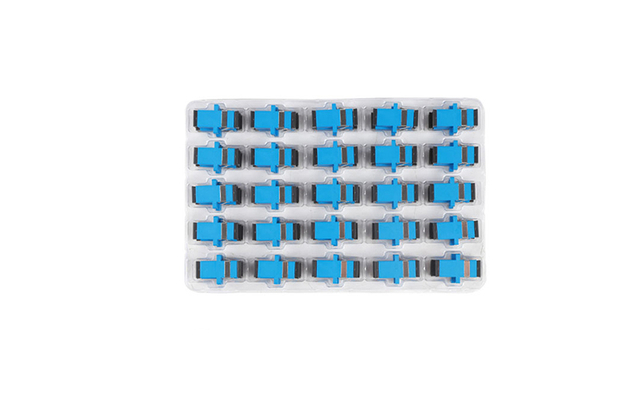
Adapter
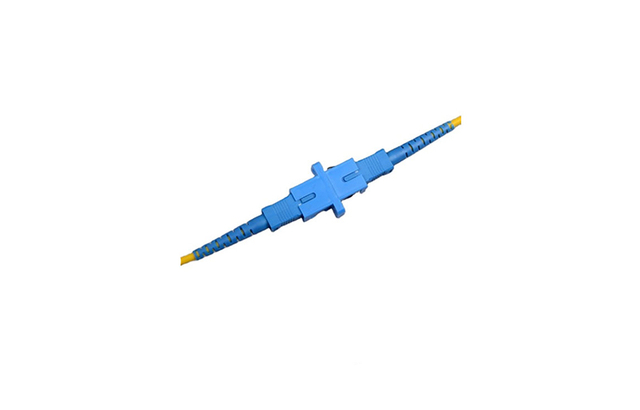
Fiber optic adapters, also known as fiber optic couplers or connectors, are crucial components in fiber optic communication systems. These adapters provide a means of connecting and aligning fiber optic cables or connectors, enabling the seamless transmission of optical signals between different network segments or devices.
The primary function of a SC Fiber Adapter is to provide a secure and precise connection point for mating two fiber optic connectors together. These adapters are designed to ensure accurate alignment of the fiber optic cores, minimizing signal loss and maximizing optical performance.
Key features and components of fiber optic adapters include:
1. Connector Compatibility: Fiber optic adapters come in various types, such as SC, LC, ST, or MPO, to accommodate different connector types and facilitate interconnectivity between them.
2. Alignment Mechanisms: The adapters incorporate alignment mechanisms, such as ceramic or metal sleeves, to ensure precise alignment and mating of fiber optic connectors, minimizing signal loss and maintaining optimal signal integrity.
3. Housing Design: Fiber optic adapters feature a housing that provides mechanical stability and protects the delicate fiber optic connections from external factors, such as dust, moisture, and physical damage.
4. Durability: These adapters are typically constructed with high-quality materials, ensuring long-term durability and reliability in demanding environments.
5. Simple Installation: Fiber optic adapters are designed for easy installation, allowing network technicians to quickly connect and disconnect fiber optic cables or connectors as needed.
6. Compatibility: Fiber optic adapters are compatible with single-mode or multimode fiber optic cables, supporting various transmission distances and bandwidth requirements.
Fiber optic adapters are widely used in telecommunications networks, data centers, and other applications where fiber optic connections need to be established or reconfigured. They play a critical role in ensuring reliable and efficient data transmission by providing a stable and low-loss connection point for fiber optic cables.
HSGQ offers a complete suite of fiber optic access equipment from the central office (carrier/data center) to the end user:
Central Office OLT Equipment (Optical Line Terminal)
As the core hub of the all-optical network, it possesses high-density, high-capacity switching and routing capabilities, supporting flexible bandwidth allocation and multi-service converged management.
Optical Network Unit Equipment
Covering various all-optical access terminals for homes, enterprises, and industries, it supports the latest generation of Wi-Fi standards, FTTR (Fiber to the Room) deployment, and PoF (Power over Fiber) technology, ensuring high-speed, low-latency network coverage to every corner.
Routers
Supporting unified management via intelligent cloud, integrating intelligent traffic control and multi-WAN access, simplifying network deployment and daily maintenance.
Network Switches
Including Gigabit/10 Gigabit switches and PoE switches, possessing industrial-grade or high-commercial-grade quality, meeting the high-concurrency forwarding and high-stability requirements of complex network architectures.
SFP Optical Modules & Media Converters
Feature strong compatibility, low power consumption, and long-distance transmission capabilities, enabling seamless photoelectric conversion between different media.