Views: 0 Author: Site Editor Publish Time: 2026-06-16 Origin: Site
Choosing between 10G, 25G, 40G, and 100G modules is not just a question of higher speed. The wrong SFP choice can lead to port mismatch, fiber incompatibility, unstable links, or unnecessary upgrade costs. Network teams often need to balance current bandwidth, switch support, fiber distance, and future growth before selecting a module. Understanding how each speed fits access, aggregation, server, and backbone connections helps avoid overbuying while still leaving room to scale. This article explains the practical differences and selection logic behind each option.
10G SFP+ is usually the safest step when a network needs a clear upgrade from 1G without a full infrastructure change. It works well for office aggregation, campus access switches, firewall uplinks, storage links, and moderate server connections. The strongest reason to choose 10G is operational maturity: modules are widely available, switch support is common, and cabling requirements are easier to manage than many higher-speed deployments.
The limitation appears when normal usage already pushes links close to capacity. A backup-heavy environment, virtualized server cluster, video workflow, or growing storage network can quickly expose 10G as the next bottleneck. Choose this speed for stable enterprise networks and cost-conscious upgrades, but avoid using it to postpone a core or aggregation redesign.
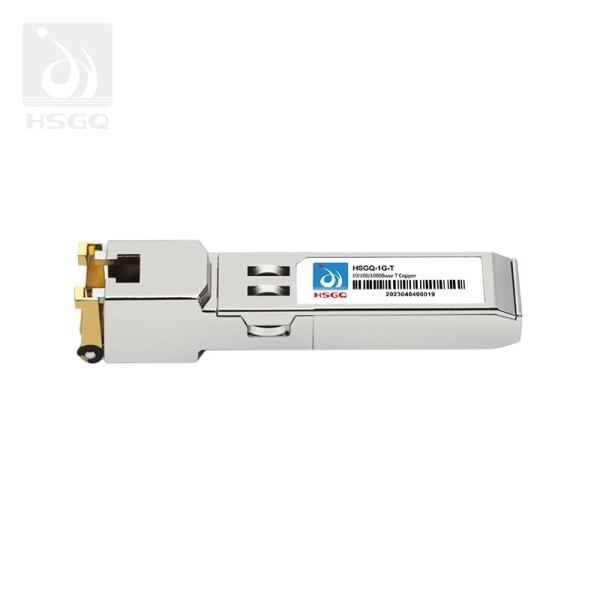
25G SFP28 should be viewed as a bandwidth-density upgrade, not simply a faster version of 10G. It provides more capacity per lane while keeping a compact port format for server access and top-of-rack switching. When 10G is becoming tight but 100G feels excessive for the edge, 25G is often the practical middle ground.
The upgrade path is another reason 25G matters. Four 25G lanes align naturally with 100G aggregation planning, which makes it easier to scale from access to spine. The main constraint is port support: a 25G SFP module needs an SFP28-capable port, and older SFP+ switches will not automatically support it.
40G is most useful when the network already has QSFP+ infrastructure or a design based on 4×10G breakout. It can aggregate several 10G access links into a faster uplink and extend the life of installed data center equipment. The right reason to choose 40G is alignment with existing infrastructure, not just the desire to sit between 25G and 100G.
The long-term weakness is that 40G is often a transitional speed. A new high-growth core may be better served by 100G because it provides more capacity per port and fits current scaling patterns more cleanly. Choose 40G when QSFP+ ports and 4×10G designs are already part of the network, but be cautious when building a new backbone from scratch.
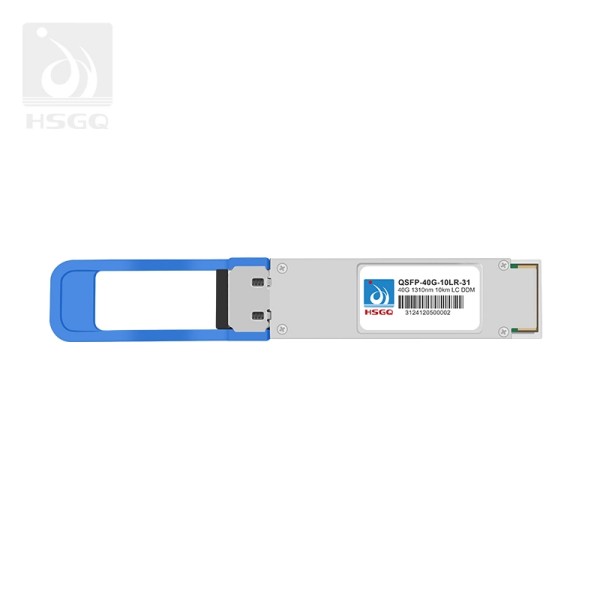
100G is suited to links that carry concentrated traffic rather than ordinary endpoint connections. A sfp module 100g option makes sense when the network needs fewer high-capacity uplinks instead of many smaller links that consume ports and complicate management. The main advantage is backbone scalability: more capacity per port, fewer uplink bottlenecks, and better room for future traffic growth.
This choice requires stricter planning. Port form factor, optical standard, fiber count, connector, wavelength, reach, power draw, and device support all need to be verified before ordering. For new data center cores and fast-growing aggregation layers, 100G is usually more future-ready than 40G; for lightly used networks, the cost may be unnecessary.
Speed | Better fit | Main reason to choose it | Main risk |
10G | Office, campus, stable server links | Mature and affordable | Can be outgrown quickly |
25G | Server access, top-of-rack, storage | Higher bandwidth density | Needs SFP28 port support |
40G | Existing aggregation, 4×10G breakout | Fits QSFP+ designs | Less ideal for new cores |
100G | Backbone, data center spine, ISP aggregation | Scalable capacity per port | Higher cabling and compatibility demands |
The phrase sfp module single mode vs multimode is really a question about distance, installed fiber, and link environment. Multimode fiber is usually better for short runs inside racks, equipment rooms, and data centers because it supports practical short-reach links at controlled cost. Single mode fiber is usually better for floors, buildings, campuses, and telecom routes because it supports longer reach with lower signal loss. The correct SFP module is therefore tied to the fiber route, not just the speed printed in the product name.
A useful planning rule is to treat the cable path as fixed until it has been inspected. If the building already has multimode fiber between nearby racks, SR-style optics may be the simplest fit. If the link crosses outdoor ducts, long risers, or campus pathways, single mode becomes the safer technical direction.
Short-reach designs serve nearby equipment such as same-rack devices, rack-to-rack connections, server uplinks, and data center rows. SR-style modules often work with multimode fiber, but actual reach depends on cable grade, connector condition, and the standard used by the optic. A clean plan should confirm OM3 or OM4 availability, patch panel quality, and the number of required fiber strands before the purchase order is placed.
Cost can also favor short-reach multimode designs when the environment is controlled. For many 10G and 25G links, duplex fiber and common connectors keep deployment simple. The sfp module fiber decision should always connect the optic to the real route, not to a generic speed target.
Long-reach links are built for distance and signal stability. LR, ER, and similar optical choices are relevant when the connection crosses buildings, floors, campus areas, or wider access networks. A proper plan should check wavelength, rated distance, optical budget, patch route, and receiver sensitivity.
Single mode is usually the stronger foundation for these routes. It supports longer distances with lower attenuation, making it suitable for backbone, campus, and telecom-style networks. The module price may be higher than a short-reach option, but replacing a poorly planned fiber route later can cost far more. Distance and fiber type should be confirmed before comparing module price or choosing between 10G, 25G, 40G, and 100G.
Speed alone does not prove that a module will work. SFP, SFP+, SFP28, QSFP+, and QSFP28 belong to related transceiver families, but they do not all fit the same port or support the same data rate. A safer order is device port type first, supported speed second, fiber distance third, and connector or coding details last. This avoids mistakes such as buying a 25G SFP module for a 10G-only port or assuming a 100G optic will work in any high-speed cage.
The host device also matters. Switches, routers, server NICs, media converters, and OLT platforms may have different rules for supported optics and diagnostics. Firmware, vendor coding, power limits, and port configuration can affect whether the link is recognized. HSGQ describes SFP modules as products used with switches, routers, and media converters, and its category page lists speed families including 10G, 25G, 40G, and 100G, which makes it useful for checking specification families after the network requirement is clear.
Connector and cabling details are where many correct-looking choices become installation problems. 10G and 25G links often use duplex LC fiber, while some 40G and 100G designs may involve MPO/MTP, breakout cables, or more careful fiber mapping. Wavelength matters because both ends of the link must operate as a matched optical pair. If one patch panel, trunk cable, or transceiver side does not match the plan, troubleshooting can take longer than the installation itself.
Fiber count should be checked early. A breakout design may require more strands than a simple duplex link, and polarity can become a real issue in dense cabling. Rack diagrams, patch records, and cable labels should be reviewed before modules arrive. This is especially valuable in data centers where one cabling error can affect several downstream connections.
DOM or DDM support gives operators visibility into optical power, temperature, voltage, and other health indicators. That visibility helps during commissioning because it can reveal weak, dirty, overpowered, or temperature-sensitive links. Without diagnostics, a marginal fiber path may look like a random switch issue or intermittent packet loss. For managed networks, monitoring is not an extra feature; it reduces troubleshooting time.
Operating conditions also shape the right SFP module choice. Indoor data centers, outdoor cabinets, industrial sites, telecom access networks, and FTTx environments expose optics to different heat, dust, and power conditions. The practical checklist should include temperature range, diagnostics, host compatibility, and spare availability, not only data rate.
The cleanest way to choose speed is to start with the network layer. Access links and smaller enterprise uplinks often fit 10G or 25G because they connect endpoints, access switches, or moderate server traffic. Top-of-rack and server access networks often lean toward 25G when workloads are dense, while aggregation layers may use 40G or 100G depending on the installed platform. Core and backbone links are stronger candidates for 100G when long-term capacity, port efficiency, and traffic concentration matter.
This layer-based approach prevents overbuying at the edge and underbuilding at the core. A branch office may not need 100G simply because it is available, and a data center spine should not stay at 10G if it is already aggregating many busy racks. The best decision balances the role of the link with the growth rate of the traffic it must carry.
Budget should be measured against the cost of the next upgrade, not just the first purchase. 10G is cheaper and easier to deploy, but it can become expensive if it forces repeated uplink additions. 25G often gives a better middle ground for modern server environments because it improves bandwidth density without forcing a full backbone redesign. 40G makes sense when it protects existing QSFP+ investment, while 100G is more suitable when the network must scale cleanly over several upgrade cycles.
The right SFP choice depends on more than speed. 10G suits stable and cost-sensitive upgrades, 25G supports growing server traffic, 40G works well in existing aggregation designs, and 100G gives backbone networks more room to scale. Fiber type, port form factor, reach, connector, and monitoring support all shape the final decision.
Shenzhen HS Fiber Communication Equipment CO., LTD. offers SFP modules across different rates and fiber requirements, helping network teams match optical transceivers to real deployment needs instead of relying on speed alone.
A: SFP stands for Small Form-factor Pluggable. It is a compact, hot-swappable transceiver used to connect network equipment through fiber or copper links.
A: An SFP module connects switches, routers, servers, and media converters by converting electrical signals into optical or copper-based signals for network transmission.
A: Standard SFP is commonly used for lower-speed links, SFP+ supports 10G connections, and SFP28 is designed for 25G network applications.
A: Choose multimode for short in-building or data center links. Choose single mode for longer campus, building-to-building, or telecom fiber connections.
A: 100G modules suit backbone, data center spine, ISP aggregation, and high-traffic switch-to-switch links where fewer, higher-capacity uplinks are needed.