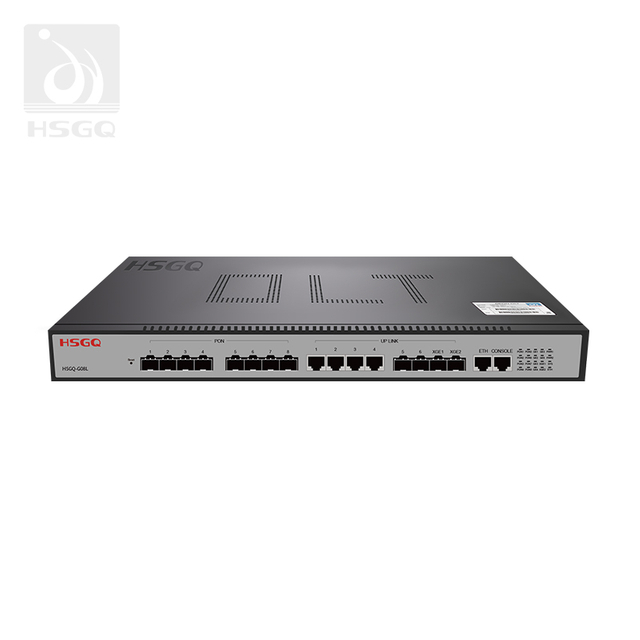
HSGQ-G04R
| Quantity: | |
|---|---|
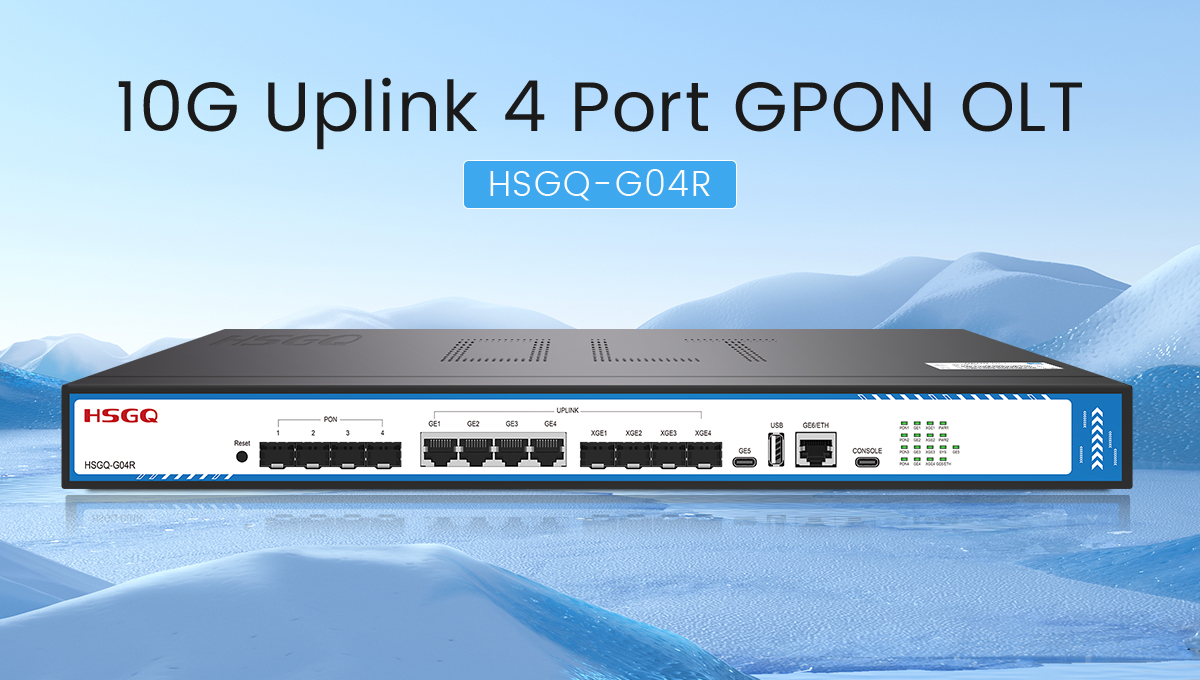
HSGQ-G04R is a 1U box-type GPON OLT. The system has good stability and high reliability. it supports multiple management methods such as CLl. WEB, SNlMP, etc. The product provides 4*GPON ports, 4*GE RJ45 uplink ports. 4*10G SFP+ slots. 1*GE Type-C port, and 1*GE/ETH combo interface. Customers can deploy, configure, manage and monitor the equipment quickly, easily and remotely via the HSGQ Cloud, greatly reducing the labor and time cost in the network construction process. it is suitable for sparsely populated, remote, cost-sensitive areas, smart industrial parks, commercial buildings, FTT, etc. Each GPON ports upports a maxmium split ratio of 1:128, supports up to 512 GPON users, and supports diferent types of ONUs under diferent networks. The 1U height is easy to install and maintain. It is an excellent choice for customers to quickly deploy FTTH networks.
Two Types of Uplink Ports
Supports electrical modules and optical modules, and can be flexibly configured according to different networking.
Open API
For easy user management
Batch management of ONTs
Support batch configuration, restart and upgrade of ONT
Port Traffic/system Monitor
View the status of each port in real time and monitor the entire link peformance
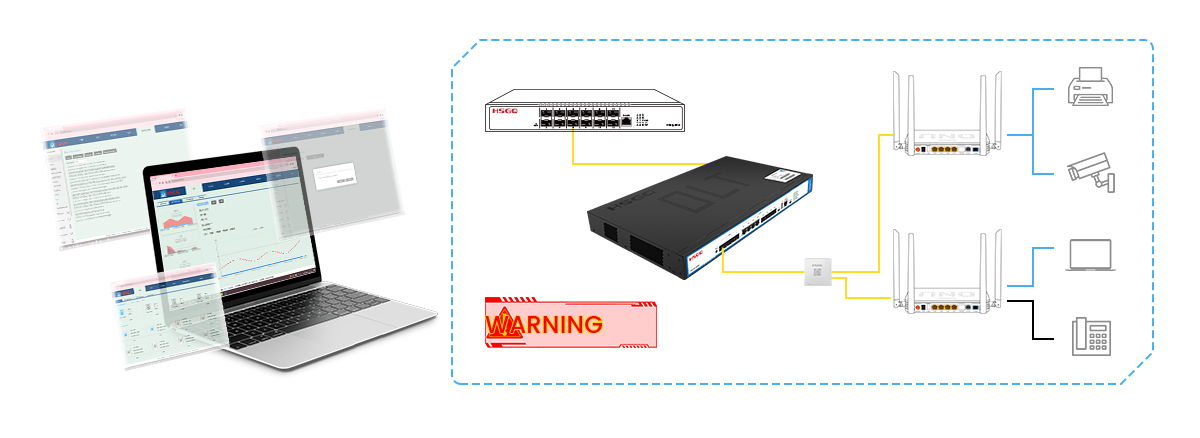
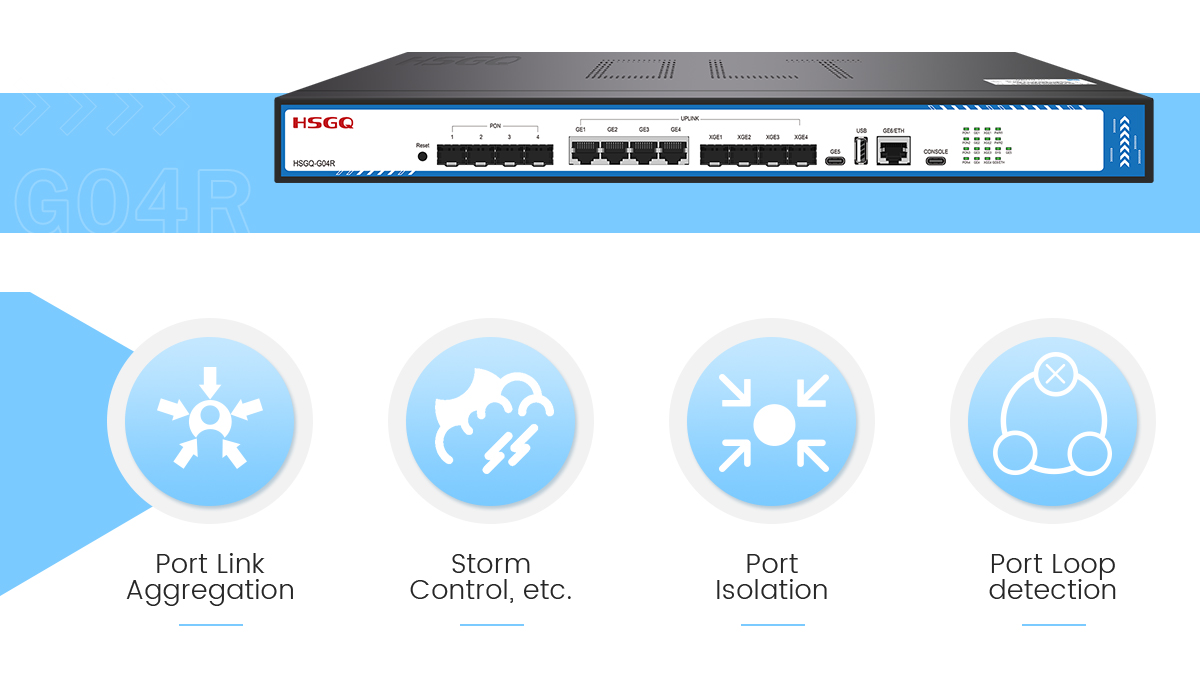
With Robust Switching Function
Can save the core switch which the upper-end server access to, directly connect the device can be set up for use.
Efficient Security

Built-in multi-layer security mechanism, supports ACL, AAA management, and 802.1X authentication to ensure the security of data transmission and prevent unauthorized access.
Redundancy Design
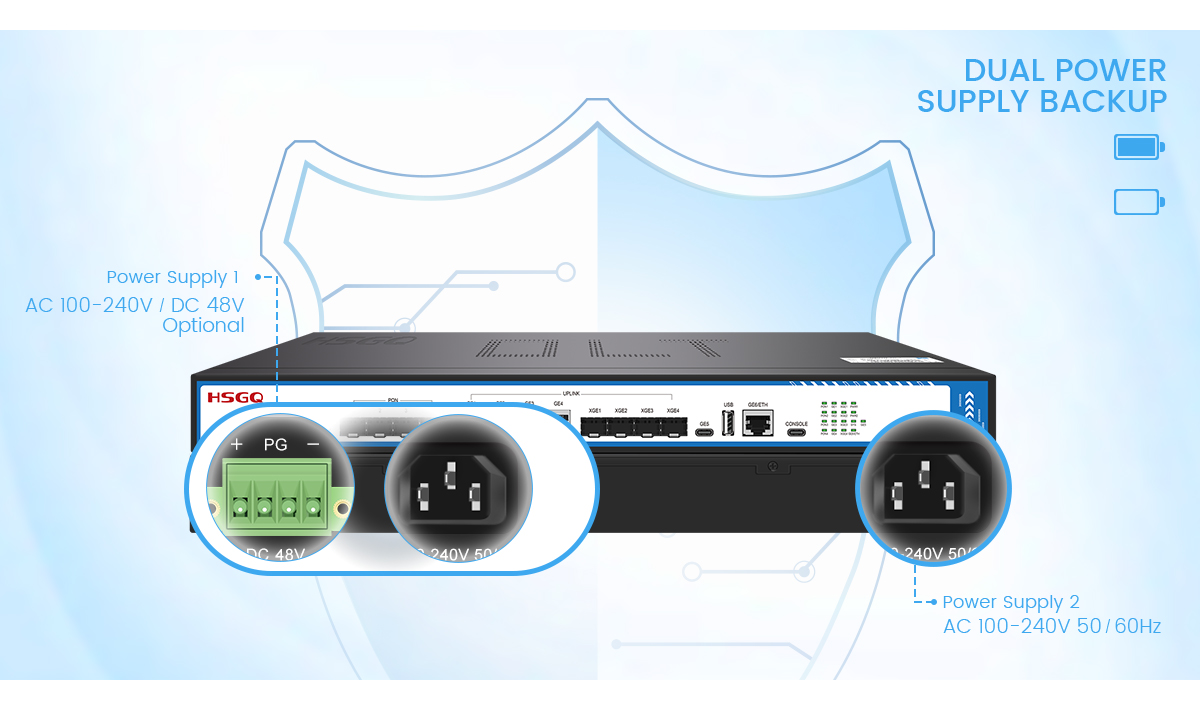
Default single power supply, dual power supply optional, support for dual AC input and AC + DC input.
Multi-scenario FTTX solution
abundant terminal types can be choose

HSGQ-G04R is a 1U box-type GPON OLT designed for FTTH, FTTB, commercial buildings, smart industrial parks, and other fiber access networks. It provides four GPON ports, four GE RJ45 uplink ports, four 10G SFP+ slots, one GE Type-C port, one USB interface, and one GE/ETH combo interface.
Each GPON port supports a maximum 1:128 split ratio, with up to 512 GPON users supported across the four PON ports. The device supports CLI, Web, SNMP, NMS, and HSGQ Cloud management, allowing network administrators to deploy, configure, monitor, and maintain the equipment through local or centralized methods.
The combination of four GPON ports and multiple 10G uplinks gives the G04R enough interface flexibility for medium-capacity FTTH and FTTB projects. It can connect to different types of ONUs according to the network design and customer access requirements.
The four GPON ports allow the OLT to serve multiple optical distribution branches from one 1U chassis. One PON port can be assigned to a building, floor, residential zone, or commercial service area, depending on the project topology.
Each GPON port supports a maximum 1:128 split ratio. The actual split level should be selected according to optical budget, fiber distance, ONU quantity, bandwidth requirements, and service quality targets.
Compared with a small 1-port GPON Mini OLT, the G04R is better suited to projects that require multiple PON branches and centralized management. For larger deployments that need additional PON capacity, a 16-port GPON OLT may be more appropriate.
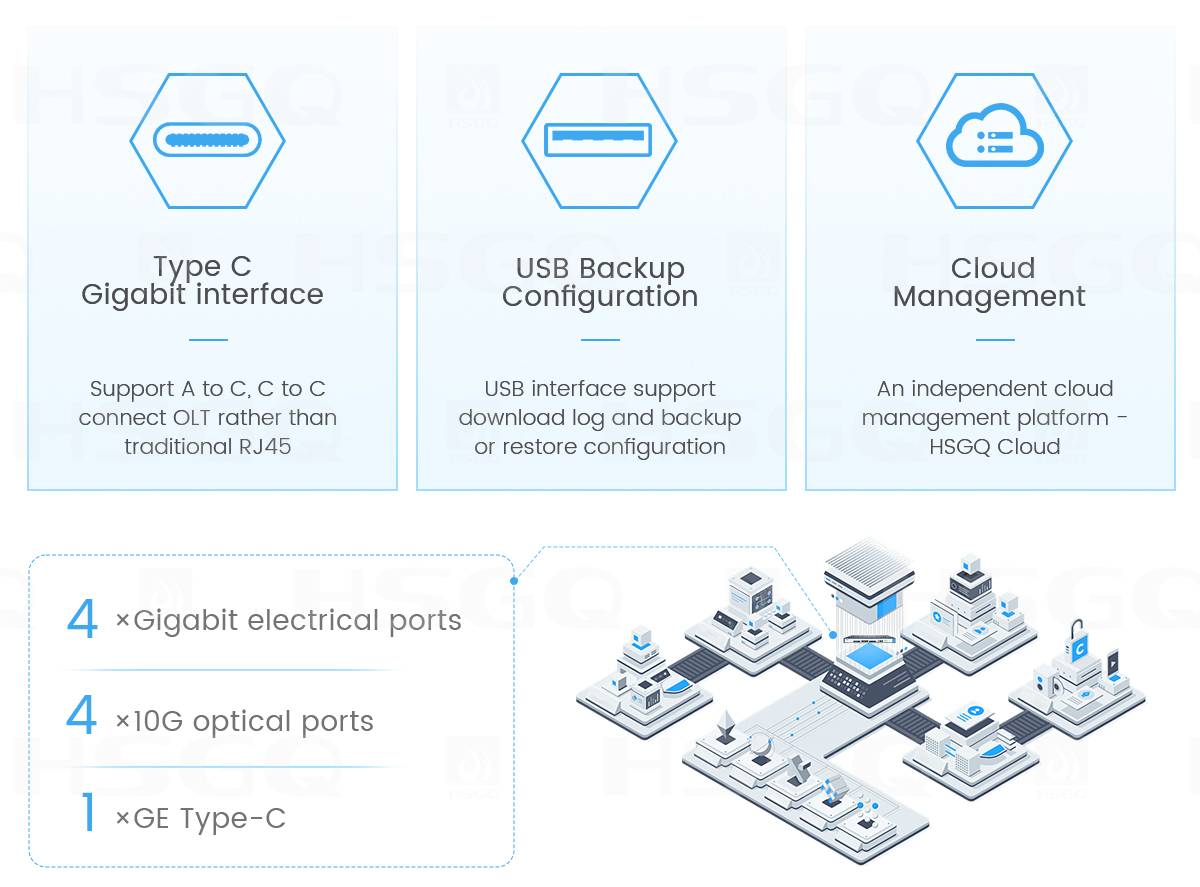
The GE Type-C interface provides an additional management or network connection option. It can be used in suitable deployment environments where a Type-C-based gigabit interface is preferred over a traditional RJ45 connection.
The USB interface supports log downloading, configuration backup, and configuration restoration. This gives administrators a practical way to retain configuration files and support recovery operations during maintenance.
HSGQ Cloud provides centralized management functions for suitable network environments. Administrators can manage device lists, projects, versions, permissions, users, alarms, and configuration tasks through a unified platform.
The G04R supports both electrical and optical uplink modules, allowing the device to adapt to different network architectures. This is useful when one project includes both short-distance electrical connections and longer optical uplinks.
The device also supports batch ONT management, including batch configuration, restart, and upgrade operations. These functions can reduce repeated manual work when many ONTs are deployed across residential buildings, offices, or remote access areas.
Batch management should be used together with proper user authorization and configuration control to prevent unintended changes across multiple terminals.
For easy user management
Support batch configuration, restart and upgrade of ONT
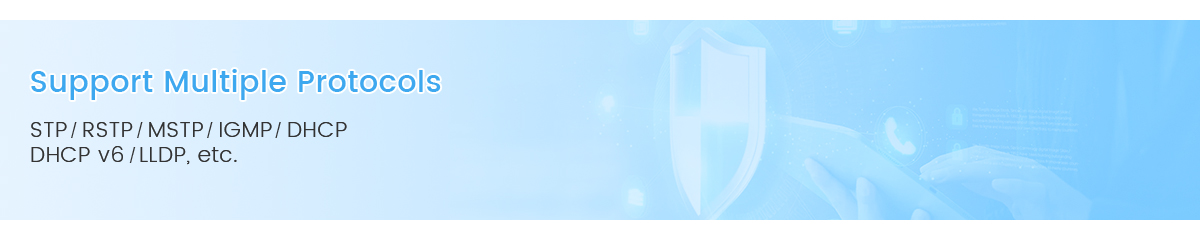
The G04R supports multiple network protocols for Layer 2 and Layer 3 operation. The product information identifies support for IPv4/IPv6, static routing, RIP/RIPng, OSPF/OSPFv3, VRRP, PIM, DHCP, IGMP snooping, RSTP, and MSTP.
Static routing can be used for fixed network paths, while RIP and OSPF support dynamic routing in different network environments. IPv4/IPv6 dual-stack support allows the OLT to work with mixed-protocol networks.
DHCP server, DHCP snooping, and DHCP relay functions can support address allocation and DHCP traffic control according to the network architecture.
IGMP snooping and proxy functions help manage multicast traffic for IPTV, video distribution, and surveillance services. RSTP and MSTP can support loop protection and network recovery in suitable Ethernet topologies.
QoS can be configured based on port, VLAN ID, ToS, or MAC address. This helps administrators apply different traffic priorities to broadband, management, voice, video, and enterprise services.
The port traffic and system monitoring functions allow administrators to view port status and monitor link performance. This can help identify abnormal traffic, link interruptions, interface overload, or other conditions that require attention.
Monitoring information can support routine maintenance and troubleshooting. When used with alarm management, logs, ping, and diagnosis functions, it gives the network team more visibility into the access layer.
The monitoring scope and displayed information depend on the management method and software configuration used in the project.
The G04R integrates switching functions for GPON access and uplink traffic management. In suitable network configurations, the OLT may reduce the need for an additional access-layer switching device between the GPON network and the upstream server or router.
The product supports port isolation, port aggregation, storm control, port loop detection, and MAC-related security functions. These features can help control traffic behavior and limit the impact of incorrect cabling, broadcast storms, or unauthorized access.
The exact topology should be evaluated before removing any upstream switch. A separate switch may still be required when the project needs additional ports, PoE, specialized Layer 2 functions, or independent network segmentation.
The G04R supports ACL, AAA management, and 802.1X authentication according to the product information. These functions can help control user access and restrict traffic based on defined rules.
ACL policies can be used to permit or deny traffic according to the network’s security requirements. AAA management can help organize administrator authentication and authorization, while 802.1X can support controlled access in compatible network environments.
Security settings should be planned together with VLAN, ONU authorization, management access, and upstream firewall policies. Using ACL alone does not replace a complete network security architecture.
The G04R uses a standard power supply configuration, with optional support for dual power input. The product design supports dual AC input or an AC + DC input arrangement according to the selected configuration.
Redundant power can be useful in access networks where service continuity is important and where separate power sources are available. The power arrangement should be confirmed when ordering because redundancy options may depend on the required hardware configuration.
Power redundancy helps reduce the impact of a single power-source failure, but it should be combined with suitable circuit protection, backup power planning, and correct installation.
The G04R can be used in different FTTX environments where multiple GPON branches and flexible uplinks are required.
The four GPON ports can serve different residential areas, buildings, or distribution zones. The 1:128 split capability provides a reference for planning ONUs across each optical branch.
Commercial buildings may require separate access groups for offices, tenants, security systems, and shared services. VLAN, QoS, multicast, and user management functions can help organize these services.
Industrial environments may use GPON access for offices, monitoring terminals, production support systems, and connected devices. Optical uplinks and centralized monitoring can simplify network management across separated areas.
Hospitals, schools, and campuses often contain several buildings and service areas. The four PON ports allow the network to be divided into different optical branches while keeping the OLT in a centralized equipment room.
Railway stations, metro facilities, airports, harbors, highways, and public monitoring sites may require optical access for WiFi, surveillance, information systems, and control equipment. The final design should be based on the site’s fiber distance, environmental conditions, and service requirements.
Supports a 32K MAC address table.
Provides complete network management functions.
Supports CLI, Web, SNMP, NMS, and cloud-based management.
Supports user, log, alarm, configuration, and device monitoring functions.
Supports flexible DBA.
Supports upstream and downstream traffic speed control.
Supports port-based traffic control.
Supports traffic shaping.
Supports port aggregation.
Supports IP ToS.
Supports IEEE 802.1Q.
Supports VLAN transparent transmission.
Supports VLAN QinQ.
Supports VLAN translation.
Supports flexible multicast control.
Supports IGMP snooping.
Supports automatic ONU identification.
Supports ONU auto-discovery.
Supports ONU auto-registration.
Supports ONT batch configuration.
Supports ONT batch restart and upgrade.
Supports the automatic loop-back test function.
Supports ACL.
Supports QoS.
Supports AAA management.
Supports 802.1X authentication.
Supports port isolation and storm control.
Supports HSGQ Cloud management.
Supports USB configuration backup and restoration.
Supports log downloading.
Supports real-time port traffic and system monitoring.
Supports remote diagnosis and software management.
Confirm the required number of GPON ports and total ONU capacity.
Check the optical budget and split ratio for each GPON branch.
Select GE RJ45 or 10G SFP+ uplinks according to the upstream network.
Confirm the required VLAN, QinQ, multicast, ACL, and QoS functions.
Check ONU compatibility and required registration policies.
Decide whether Type-C, USB, local CLI, NMS, or cloud management will be used.
Confirm whether dual AC or AC + DC power redundancy is required.
Reserve sufficient cabinet space for ventilation, fiber routing, and maintenance.
The product information specifies a maximum 1:128 split ratio per GPON port and up to 512 GPON users across four ports. The actual number should be determined by optical budget, service requirements, and network planning.
Yes. The G04R is suitable for FTTB, FTTH, commercial buildings, residential communities, industrial parks, and other FTTX applications that require multiple GPON branches.
The device provides four GE RJ45 uplink ports and four 10G SFP+ optical uplink slots. It also provides a GE Type-C port and a GE/ETH combo interface according to the product configuration.
The product supports different types of ONUs under different network configurations. The specific ONU model, optical class, management method, and service profile should be confirmed before deployment.
The USB interface supports log downloading, configuration backup, and configuration restoration. It can be used to retain configuration files and assist with maintenance operations.
The standard configuration uses a single power supply. Optional configurations support dual AC input or AC + DC input. The required power arrangement should be confirmed when requesting a quotation.
Yes. The G04R supports HSGQ Cloud management, as well as CLI, Web, SNMP, NMS, and local management methods.
Yes. It provides four 10G SFP+ slots for optical uplink connections. The suitable optical module should be selected according to the upstream equipment, fiber type, and transmission distance.
A 1:128 split ratio means that one GPON port can theoretically connect to up to 128 optical terminals through a passive splitter. Practical deployment depends on optical loss, distance, bandwidth allocation, and service requirements.
Share your GPON port requirements, ONU capacity, uplink type, split ratio, and power configuration. Our team can help evaluate the HSGQ-G04R for FTTH, FTTB, commercial, and industrial FTTX projects.
Request a Quote View Product Details