Views: 0 Author: Site Editor Publish Time: 2026-04-01 Origin: Site
Need fiber access without adding bulky hardware? A gpon stick is becoming a smart option for compact deployments and POL upgrades. In this guide, you will learn where a gpon stick fits, what makes an olt gpon stick or gpon onu stick useful, how to use it correctly, and what to check before deployment.
In many live deployments, the challenge is not whether GPON can deliver enough bandwidth, but whether the hardware model fits the site. A standalone OLT or ONU usually requires extra chassis space, separate power planning, additional cabling, and more installation steps. That works well in larger central offices or structured telecom rooms, but it becomes less practical in small cabinets, legacy building retrofits, and edge locations where every port and every watt matters. In these environments, adding a full device can create more friction than value, especially when the network only needs a compact GPON extension rather than a full platform buildout. This is where the idea behind a gpon stick becomes attractive: it introduces GPON capability in a pluggable format that is easier to integrate into existing infrastructure instead of forcing a complete hardware redesign.
Another reason traditional GPON hardware may feel oversized is deployment speed. In retrofit projects, operators often need to work around limited rack depth, restricted power access, or existing Ethernet equipment that is still serviceable. Replacing those elements outright can increase project cost and delay activation. A more compact approach allows teams to reuse compatible switches, routers, or access devices while extending optical access in a faster and less disruptive way. That makes the gpon stick especially relevant where installation simplicity matters almost as much as network performance.
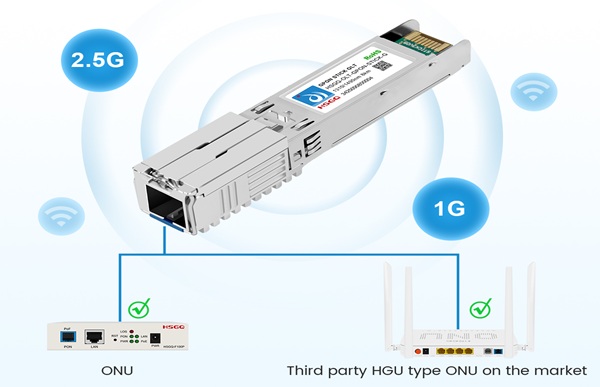
Deployment scenario | Why a GPON stick fits |
FTTH and FTTx access expansion | Adds GPON capability quickly where operators need lightweight rollout without introducing bulky new hardware |
Passive Optical LAN upgrades | Helps transform traditional Ethernet-based environments into more compact optical access layouts |
Small business branches and edge sites | Works well in sites with limited cabinet space, low power availability, or minimal on-site technical support |
Compact enterprise networks | Supports targeted GPON extension when a full standalone platform would be disproportionate to the project size |
These scenarios share one pattern: the network is real, active, and space-sensitive, but still needs optical access growth. A gpon stick fits best where operators want targeted deployment rather than a full rebuild.
For operators and integrators, the value is practical rather than theoretical:
● It reduces hardware footprint in cabinets where space is already constrained.
● It simplifies optical network extension by using a pluggable form factor instead of another standalone box.
● It accelerates deployment on existing compatible equipment, which can shorten rollout cycles and lower installation complexity.
That combination makes the gpon stick most relevant in networks that need compact GPON enablement with less disruption to the current device layout.
One of the most practical strengths of a gpon stick is its pluggable form factor. Instead of deploying a separate box with its own housing, power adapter, and mounting requirements, the module can be inserted into a compatible optical port on a switch, router, firewall, or other network device. This makes it especially useful in environments where operators want to introduce GPON capability without redesigning the whole hardware layout. In compact cabinets, branch offices, retrofit projects, and space-sensitive enterprise sites, that difference matters because every added device increases cable complexity, power demand, and installation time.
The integration benefit is not just about size. A pluggable module also supports a more modular deployment model. Network teams can reuse existing compatible equipment and add optical access functions where they are needed most, instead of replacing an entire access layer. That is why a gpon stick is often seen as a practical bridge between traditional Ethernet-based infrastructure and newer passive optical deployments. When the goal is targeted expansion rather than a full rebuild, the compact format becomes a real operational advantage.
A second major feature is deployment efficiency. Many gpon stick solutions are designed around plug-and-play installation, which helps reduce the time needed for field rollout. In practical terms, this means fewer hardware steps, less rack preparation, and faster service activation than a traditional multi-device setup that depends on standalone optical equipment. Some product designs also support automatic ONU registration, which can further simplify provisioning in networks that prioritize rapid turn-up.
For operators, lower power consumption is another meaningful advantage. A compact GPON module generally places less burden on edge sites and smaller cabinets than a separate powered device, which makes it appealing for distributed locations with limited electrical planning. This lighter deployment model is also easier to scale in selective scenarios, because adding GPON access does not always require new shelves, extra adapters, or dedicated mounting space. The result is a solution that is not only smaller, but often faster to install and easier to fit into existing operational workflows.
From a service perspective, the value of a gpon stick depends on more than physical convenience. It must still support the functions that matter in a working network. In practice, buyers typically focus on whether the module can deliver stable GPON access, whether it supports transparent VLAN transmission, and whether it can meet the expected balance of distance, split ratio, and traffic capacity for the target site. Practical specifications such as Class B+ optics, support for a 1:32 split ratio, transmission distance around 8 km in certain deployments, and relatively low power draw help define the realistic use range of the product rather than just its marketing position.
Feature area | Why it matters in deployment |
Pluggable GPON access | Adds optical capability without another standalone device |
VLAN transparency | Helps preserve service delivery across existing network designs |
Compact power profile | Better fit for edge sites and small cabinets |
Split ratio and optical reach | Determines whether the module matches the intended network scale |
Bandwidth performance | Affects service quality in live user environments |
The distinction between an olt gpon stick and a gpon onu stick is fundamental. An olt gpon stick works on the network side, giving upstream equipment a compact way to provide GPON service capability. A gpon onu stick, by contrast, works on the user or terminal side, allowing compatible customer-side or access-side equipment to receive GPON service in module form. This difference is not just technical labeling; it affects where the module is installed, how it is provisioned, and which side of the GPON link it is meant to serve.
Before installing a gpon stick, the first task is not physical insertion but compatibility confirmation. A compact module can only work properly if the host device recognizes it and the upstream GPON environment supports the intended role. In practice, this means checking whether the switch, router, or firewall has a compatible optical interface, whether the port can identify the module correctly, and whether the network side is prepared for the required registration and service profile. This step matters because a GPON stick may appear physically suitable for a slot while still failing at the software, chipset, or provisioning level once powered on.
Compatibility review should also include the optical path itself. The installer needs to verify connector type, optical budget, expected transmission distance, and whether the module is being used on the correct side of the GPON architecture. An olt gpon stick and a gpon onu stick are not interchangeable, so checking the service role in advance helps avoid installation errors that can waste both time and hardware resources.
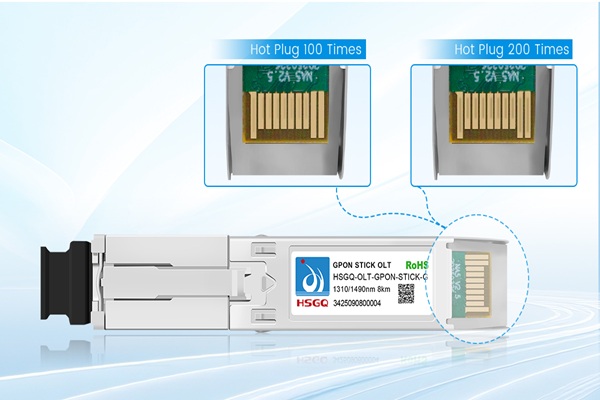
A clean deployment sequence reduces troubleshooting later. The process below reflects a practical workflow for bringing a gpon stick online without skipping key checks:
● Insert the module into the correct optical slot on the host device.
● Connect the optical fiber link and confirm that physical link indicators behave normally.
● Complete registration and service provisioning according to the GPON side requirements.
● Verify that traffic can pass correctly after activation, rather than assuming link-up status means full service readiness.
Each of these steps has operational significance. Physical insertion alone only confirms that the module is seated. Service availability depends on optical link integrity, successful discovery or registration, and correct service mapping after activation. In many real deployments, the main risk comes from assuming that the module is ready as soon as it is detected by the host, when in fact VLAN behavior, service profiles, or ONU-side parameters may still be incomplete.
Operational focus | Why it matters |
Interoperability testing | Confirms that the module, host device, and GPON network can work together before larger rollout |
VLAN and profile alignment | Prevents service activation problems caused by mismatched provisioning |
Real traffic validation | Ensures the module carries live user traffic correctly instead of only showing optical link status |
Stable operation depends on disciplined validation rather than fast installation alone. A gpon stick should be tested in a small pilot environment before wider rollout, especially if the deployment includes mixed equipment or nonuniform access profiles. Teams should also verify actual service outcomes such as forwarding behavior, user access, and network stability under load. This is important because a live GPON deployment is measured by usable service delivery, not only by successful module detection or optical synchronization.
One of the first problems with a gpon stick appears before traffic ever goes live: the host device may not recognize the module correctly. A switch, router, or firewall can have an optical interface that seems physically compatible, yet still fail to identify the stick at the system level. In real deployments, support often depends on more than slot type. Chipset behavior, firmware expectations, interface policy, and vendor-specific module checks can all affect whether the device accepts the stick and exposes it as a usable GPON interface. This is why a successful lab insertion does not automatically prove that a production rollout will be stable across multiple hardware models.
Even when two platforms appear similar, support may remain inconsistent. Some environments work smoothly with a given module, while others show unstable detection, partial functionality, or no usable service at all. That inconsistency is especially important for teams planning multi-site rollout, because a gpon stick that behaves well on one device family may create avoidable troubleshooting effort on another. Evaluation should therefore begin with verified host compatibility, not with assumptions based on form factor alone.
Another common issue appears during GPON onboarding. In mixed environments, ONU discovery or registration may fail because the stick, the host device, and the upstream GPON system do not fully align on provisioning logic. The problem is often not the optical link itself, but the management path behind it. If service profiles, OMCI-related behavior, VLAN handling, or access parameters do not match what the OLT expects, the module may be visible yet still unable to bring service online.
To evaluate this risk properly, teams should not treat “module detected” as the same as “service activated.” A valid test should include provisioning success, usable traffic delivery, and confirmation that the GPON side can manage the connection as intended. This matters even more when the network uses different equipment origins, because cross-platform interoperability tends to expose registration weaknesses quickly.
Performance questions become more important once the basic link is working. A compact olt gpon stick can be attractive for lightweight deployments, but it may not offer the same management depth, throughput headroom, or terminal scale as a dedicated OLT platform. In smaller scenarios, that trade-off can be acceptable. In larger or growing networks, it can become a limitation that affects monitoring, policy control, maintenance workflows, and long-term service consistency.
Evaluation area | What to check before deployment |
Host compatibility | Whether the switch, router, or firewall consistently recognizes and supports the module |
Registration behavior | Whether the stick can be discovered, provisioned, and managed correctly in the target GPON environment |
Service delivery | Whether real traffic, VLAN policy, and user-facing services work after activation |
Scale fit | Whether the expected split ratio, traffic load, and user count match the stick’s practical limits |
Growth potential | Whether the deployment may outgrow the compact model and require deeper management later |
A gpon stick is usually the right choice when the priority is compact, fast, and flexible GPON deployment. It works well for selective optical expansion, smaller sites, space-sensitive cabinets, and projects where reusing existing compatible hardware brings clear operational value. It is less suitable when the network depends on higher stability margins, more advanced service control, deeper management visibility, or larger-scale growth that would be better served by a full dedicated GPON platform.
A gpon stick is a smart way to add GPON access with less space, less hardware, and more flexibility. The best results come from choosing the right form factor, understanding features, and planning for compatibility early. Shenzhen HS Fiber Communication Equipment CO., LTD. adds value with compact, deployment-friendly GPON stick products and dependable service support for practical network upgrades.
A: A gpon stick is a pluggable GPON module that adds optical access capability to compatible network equipment.
A: An olt gpon stick is suitable when a network needs compact GPON service delivery from the provider or aggregation side.
A: A gpon onu stick lets compatible customer-side equipment receive GPON service without a separate standalone ONU.
A: Before deployment, check gpon stick compatibility, provisioning support, optical budget, and VLAN or profile alignment.