Views: 0 Author: Site Editor Publish Time: 2026-09-29 Origin: Site
Choosing the right OLT can decide the performance of a fiber network.
With rising bandwidth demands, XGS-PON OLT is becoming a key upgrade option.
This article compares XGS-PON, GPON, and EPON OLT features.
You will learn how to select, use, and troubleshoot the right solution.
An OLT (Optical Line Terminal) is the core device in a Passive Optical Network (PON). It is usually installed at the service provider side and connects the main network system with multiple end users through optical fiber infrastructure.
In a typical FTTH network, the OLT communicates with optical splitters and ONU/ONT devices. It converts electrical signals from the service network into optical signals and distributes data through fiber connections.
The basic connection structure includes:
| Network Component | Function |
|---|---|
| OLT | Controls and manages optical access network communication |
| Optical Distribution Network (ODN) | Transfers optical signals through fiber and splitters |
| ONU/ONT | Provides network access for end users |
The performance of an OLT directly influences network stability. A suitable OLT helps operators manage users efficiently, maintain stable bandwidth allocation, and support future service upgrades.
For example, an operator serving residential users may require different equipment compared with a business network providing high-speed cloud services. Understanding network goals before selection helps avoid unnecessary replacement costs.
Modern OLT equipment provides more than simple optical signal conversion. It integrates multiple management and control functions to improve network operation.
Important functions include:
Optical signal conversion between electrical and optical networks.
Bandwidth allocation for different users and services.
ONU registration and user management.
Network monitoring and fault detection.
Remote configuration and maintenance.
A high-quality OLT allows operators to manage large numbers of connected users more efficiently. It also helps reduce maintenance time by providing clear network status information.
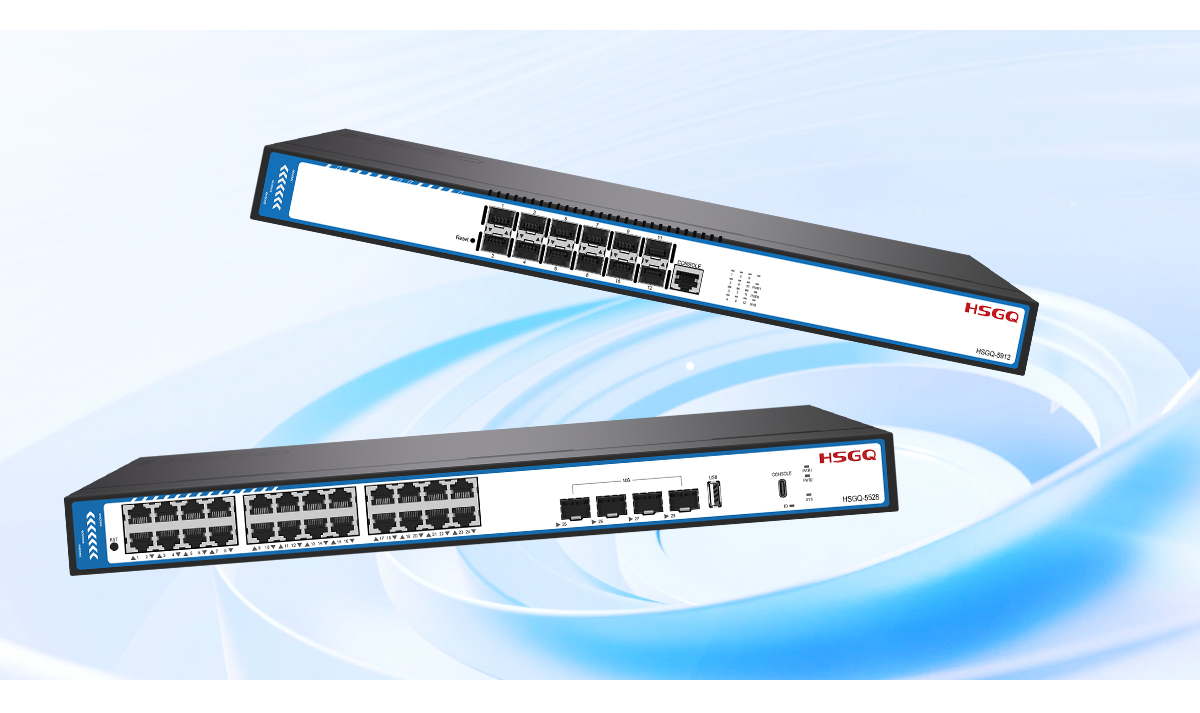
HSGQ provides professional fiber access solutions for different network requirements. Customers can view available OLT products to compare different configurations for FTTH and broadband applications.
Choosing an OLT is not only about current network demand. It also affects future expansion possibilities.
Different PON technologies provide different bandwidth levels and upgrade capabilities. A network designed only for current requirements may face limitations when users need higher speeds later.
Before selecting equipment, operators should consider:
Expected subscriber growth.
Future bandwidth demand.
New service requirements.
Network expansion plans.
A properly selected OLT provides better scalability and reduces the need for frequent hardware upgrades.
Note:
A network upgrade plan should consider both current service requirements and future bandwidth growth to avoid repeated equipment replacement.
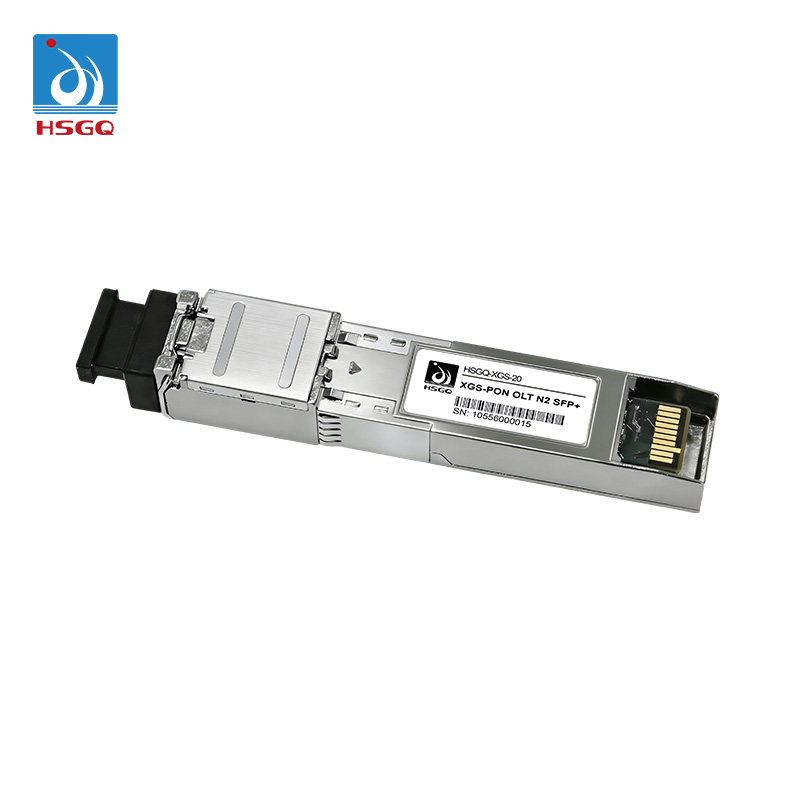
XGS-PON, GPON, and EPON are different PON technologies used for fiber access networks. Each technology has different performance characteristics and suitable applications.
XGS-PON is a next-generation PON technology designed for higher bandwidth applications. It supports symmetrical transmission, which means upload and download speeds can reach similar high levels.
Its advantages include:
Higher bandwidth capacity.
Better support for cloud applications.
Improved performance for business users.
Stronger future upgrade capability.
GPON has been widely deployed in residential FTTH networks. It provides reliable broadband access and supports services such as internet access, IPTV, and voice communication.
GPON remains suitable for many existing networks because of its mature technology and broad compatibility.
EPON uses Ethernet-based transmission technology. It is commonly used in cost-sensitive fiber deployment projects that require stable broadband access.
EPON solutions are often selected for smaller networks and basic fiber access applications.
Different OLT technologies are suitable for different project requirements.
| Technology | Suitable Applications |
|---|---|
| EPON OLT | Basic broadband access, small-scale fiber networks, cost-sensitive projects |
| GPON OLT | Residential FTTH, enterprise broadband, IPTV and voice services |
| XGS-PON OLT | High-speed FTTH, enterprise networks, cloud applications, data-intensive services |
For example, a residential community with standard internet requirements may continue using GPON technology. However, a business park requiring high-speed symmetrical connections may benefit more from XGS-PON deployment.
Operators should select equipment based on actual network conditions rather than choosing only the newest technology.
Many operators are upgrading their fiber networks because user demand continues to increase. Video streaming, cloud computing, remote work, and smart applications all require higher bandwidth.
Compared with traditional GPON and EPON systems, XGS-PON OLT provides several advantages:
| Advantage | Description |
|---|---|
| Higher Bandwidth | Supports demanding applications requiring faster data transmission |
| Symmetrical Speed | Provides strong upload and download performance |
| Better Scalability | Supports future network expansion |
| Advanced Applications | Suitable for cloud, enterprise, and smart network services |
For operators planning long-term network development, XGS-PON can provide more flexibility.
HSGQ offers different fiber access solutions, including advanced optical line terminal products designed for various deployment scenarios.
Selecting the correct OLT requires a clear understanding of network scale, subscriber requirements, and future development plans. Different projects have different requirements for port capacity, uplink performance, ONU compatibility, and management functions.
A suitable XGS-PON OLT should not only meet current bandwidth demand but also provide enough flexibility for future expansion. Before purchasing, operators should evaluate their network structure and service goals carefully.
The number of PON ports is one of the first factors to consider when selecting an OLT. It determines how many users can be connected and how the network can be expanded in the future.
Common OLT configurations include:
| OLT Configuration | Suitable Applications |
|---|---|
| 4-Port OLT | Small FTTH projects, offices, and limited user deployments |
| 8-Port OLT | Medium-scale residential and enterprise networks |
| 16-Port XGS-PON OLT | Large FTTH networks, high-density users, and future expansion projects |
A 16*port XGS-PON OLT is suitable for operators that need higher subscriber capacity and stronger bandwidth support. It allows network providers to connect more users through a single device while maintaining efficient management.
When selecting port capacity, operators should consider:
Current subscriber quantity.
Expected user growth.
Coverage area.
Required bandwidth per user.
Future network expansion.
Choosing a larger capacity OLT may provide more flexibility for future upgrades, while smaller configurations can be suitable for specific projects with limited requirements.
OLT and ONU compatibility is critical for stable PON network operation. The OLT communicates directly with ONU devices installed at customer locations, so compatibility problems may affect network deployment.
Before purchasing an OLT, buyers should confirm:
Supported PON standards.
ONU compatibility.
Existing network equipment integration.
Management platform support.
For example, a GPON network usually requires compatible GPON ONU devices. If operators plan to upgrade to XGS-PON technology, they should evaluate whether existing customer equipment can support the new standard.
A complete compatibility evaluation helps reduce installation problems and improves deployment efficiency.
Tip:
Prepare a list of existing ONU models and network equipment before contacting suppliers. It helps suppliers recommend suitable OLT solutions faster.
Uplink capacity affects how efficiently the OLT connects to the core network. As subscriber numbers increase, insufficient uplink performance may become a network bottleneck.
Important technical factors include:
| Feature | Importance |
|---|---|
| GE/10GE Uplink | Supports higher traffic transmission between access and core networks |
| VLAN Support | Helps manage different users and services |
| Remote Management | Improves operation and maintenance efficiency |
| Network Monitoring | Helps identify problems quickly |
For modern fiber networks, management functions are as important as hardware performance. Operators need convenient tools to configure devices, monitor network status, and maintain stable operation.
HSGQ provides various optical access products for different applications. Customers can explore the company’s fiber network solutions to understand suitable equipment options.
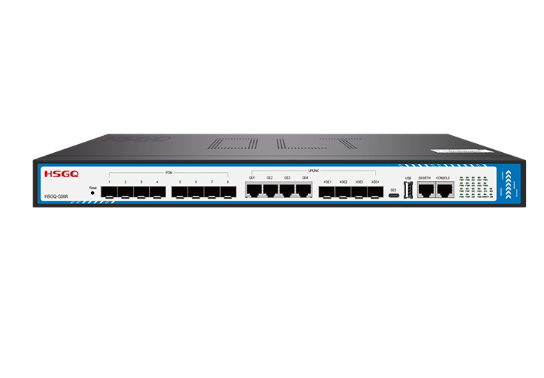
The choice between XGS-PON OLT, GPON OLT, and EPON OLT depends on application requirements. There is no single solution suitable for every network.
Operators should evaluate bandwidth demand, user type, investment plan, and future services before making a decision.
XGS-PON OLT is designed for networks requiring higher bandwidth and stronger scalability. It is especially suitable for applications where upload performance and future expansion are important.
Typical applications include:
High-speed FTTH networks.
Enterprise broadband services.
Smart city infrastructure.
Cloud-based applications.
High-definition video services.
For example, enterprises using cloud platforms, video conferencing, and large data transfers may require stronger upload and download capability. In these situations, XGS-PON can provide better network performance.
XGS-PON is also suitable for operators planning long-term upgrades because it provides additional bandwidth capacity for future services.
GPON OLT continues to be widely used in many FTTH projects. It provides stable performance and mature technology for standard broadband services.
GPON is suitable for:
Residential broadband access.
Existing GPON infrastructure.
IPTV services.
Standard enterprise connections.
For operators that already have GPON networks, continuing to use GPON equipment may reduce upgrade costs and simplify network management.
However, operators should consider future bandwidth growth if they expect increasing demand from users.
EPON OLT is often selected for projects that focus on cost efficiency and basic fiber access.
Suitable applications include:
Small and medium fiber networks.
Basic broadband projects.
Cost-sensitive deployments.
EPON provides reliable Ethernet-based transmission and can meet many standard access requirements.
The final choice should depend on project goals, not only equipment price.
Correct installation and configuration are essential for stable OLT operation. Even high-performance equipment requires proper deployment to achieve expected network performance.
The general deployment process includes several steps:
Install the OLT equipment in the network room.
Connect optical fiber cables.
Configure network parameters.
Register ONU devices.
Test communication performance.
During installation, operators should confirm fiber connection quality and optical power levels. Incorrect fiber connections can cause communication failures or unstable performance.
A professional installation process helps reduce future maintenance problems.
After installation, operators need to configure important network parameters.
Common configuration items include:
VLAN settings.
Optical parameters.
User bandwidth allocation.
Security settings.
ONU authorization.
Proper configuration helps improve network efficiency and prevents unnecessary service interruptions.
For example, bandwidth allocation settings determine how network resources are distributed among users. Incorrect settings may cause slow speeds or unstable connections.
Regular maintenance helps extend equipment life and improve network reliability.
Recommended maintenance tasks include:
Monitor optical power levels.
Check system alarms.
Update firmware when required.
Review connected ONU status.
Record network changes.
Continuous monitoring allows operators to identify potential problems before they affect users.
Tip:
Operators should keep updated network diagrams and configuration records. They make troubleshooting and future expansion easier.
Even with proper installation and configuration, OLT networks may experience performance issues during long-term operation. Common problems usually involve optical signals, ONU registration, configuration errors, or bandwidth limitations.
A systematic troubleshooting process helps operators quickly identify the root cause and restore stable network services.
Optical signal problems are among the most common issues in fiber access networks. When an OLT cannot communicate properly with ONU devices, the first step is checking the physical fiber connection.
Common optical problems include:
No optical signal.
Low optical power.
Damaged fiber cables.
Incorrect fiber connections.
Dirty optical connectors.
Operators can follow these troubleshooting steps:
| Check Item | Troubleshooting Method |
|---|---|
| Fiber connection | Confirm all optical cables are connected correctly |
| Optical power | Measure signal strength using optical testing tools |
| Optical module | Check module status and compatibility |
| Fiber quality | Inspect possible damage or signal loss |
Poor optical performance may reduce network stability or cause users to lose connection. Regular fiber inspection helps prevent unexpected service interruptions.
For example, if multiple ONU devices lose connection at the same time, the issue may come from the OLT optical interface, splitter, or fiber link instead of individual user equipment.
ONU registration problems can prevent users from accessing network services. Since the OLT manages connected ONU devices, configuration accuracy is important.
Common causes include:
ONU not authorized.
Incorrect device configuration.
PON standard mismatch.
Incorrect network parameters.
Compatibility issues.
When troubleshooting ONU problems, operators should check:
Confirm whether the ONU appears in the OLT management system.
Verify authentication information.
Check PON mode compatibility.
Review VLAN and service configuration.
Restart or reset devices if necessary.
For example, a GPON ONU may fail to connect when the OLT configuration does not match the required authentication settings. Proper configuration ensures stable communication between the OLT and user terminals.
Bandwidth issues usually appear when network traffic increases or equipment configuration does not match user requirements.
Possible causes include:
Overloaded PON ports.
Incorrect bandwidth allocation.
Limited uplink capacity.
Increased subscriber demand.
Improper network planning.
Operators can improve performance by:
Reviewing user bandwidth settings.
Checking uplink utilization.
Expanding PON capacity.
Upgrading to higher-performance solutions.
For networks experiencing continuous growth, upgrading from GPON OLT to XGS-PON OLT can provide additional bandwidth capacity and better support future applications.
Selecting an OLT supplier is as important as selecting the right technology. A reliable supplier should provide suitable equipment, technical support, and long-term service assistance.
Before purchasing, buyers should evaluate product capability, technical experience, and after-sales support.
A professional supplier should provide detailed technical information for different network applications.
Important evaluation factors include:
OLT product range.
Supported PON standards.
Port configurations.
Uplink options.
Network management functions.
Quality control process.
Different projects may require different OLT configurations. For example, a small FTTH project may use a lower-port OLT, while large operators may require a 16*port XGS-PON OLT for higher user density.
Buyers should compare specifications carefully instead of selecting equipment only based on price.
Different OLT models provide different capabilities. Before making a purchase decision, buyers should compare:
| Evaluation Factor | Why It Matters |
|---|---|
| Port Quantity | Determines subscriber connection capacity |
| PON Standard Support | Defines network performance and compatibility |
| Uplink Configuration | Affects data transmission capacity |
| Management Functions | Improves operation and maintenance efficiency |
For example:
A GPON OLT may fit standard residential broadband.
An EPON OLT may suit cost-sensitive fiber projects.
An XGS-PON OLT may better support high-bandwidth applications.
HSGQ provides professional optical access solutions for different network requirements. Customers can check available OLT products and select suitable models based on deployment needs.
Long-term technical support is important for network equipment operation.
A reliable supplier should provide:
Installation guidance.
Configuration support.
Troubleshooting assistance.
Firmware updates.
Technical consultation.
Network equipment is used for many years, so supplier support can directly affect operation efficiency.
A supplier with strong technical capability can help customers solve deployment challenges and improve network reliability.
Before purchasing an OLT, buyers should prepare clear project information. This helps suppliers recommend suitable solutions and reduces communication time.
| Requirement | Purpose |
|---|---|
| Network type | Determines suitable PON technology |
| Subscriber quantity | Defines required port capacity |
| Bandwidth demand | Helps select XGS-PON, GPON, or EPON |
| ONU compatibility | Ensures stable network integration |
| Expansion plan | Supports future upgrades |
A complete project evaluation helps avoid selecting equipment that cannot meet future requirements.
Many network problems come from incorrect equipment selection during the planning stage.
Common mistakes include:
Choosing equipment only based on price.
Ignoring future bandwidth demand.
Selecting incompatible ONU devices.
Overlooking supplier support.
Not considering network expansion.
A low-cost solution may meet current needs but create limitations when user demand increases.
A suitable OLT solution improves:
Network stability.
User experience.
Operation efficiency.
Future upgrade capability.
Operators should select equipment based on both current requirements and long-term development plans.
For example, businesses requiring cloud services, high-speed internet, or large data transmission may benefit from XGS-PON technology because it provides stronger bandwidth capability.
HSGQ focuses on providing reliable fiber network equipment solutions. Through professional product design and technical support, it helps customers build efficient and scalable access networks.
Choosing the right OLT requires evaluating bandwidth needs, network scale, and future upgrades.
HSGQ provides professional OLT solutions, including XGS-PON OLT and GPON/EPON OLT, helping customers build stable and scalable fiber access networks.
With reliable performance and flexible configurations, HSGQ supports efficient broadband deployment for different applications.
A: An OLT is the core device in a PON network. It connects service providers with ONU users and manages optical signal transmission.
A: XGS-PON OLT provides higher bandwidth, symmetrical transmission, and better scalability for future fiber network upgrades.
A: Select an OLT based on port quantity, subscriber numbers, bandwidth requirements, ONU compatibility, and future expansion plans.
A: XGS-PON OLT is suitable for high-speed FTTH networks, enterprise broadband, cloud services, and data-intensive applications.
A: Check optical power, fiber connections, ONU registration, configuration settings, and bandwidth allocation to locate network issues.