Views: 0 Author: Site Editor Publish Time: 2025-12-30 Origin: Site
In today's digital world, speed and reliability are crucial. Have you ever wondered how XGS-PON stacks up against GPON? Understanding these technologies is essential for optimizing your network.
In this article, we will explore the key differences between XGS-PON and GPON, focusing on speed and latency. You'll learn about the advantages of XGS-PON, including its 4-port OLT solutions and the benefits of using black XGS-PON OLTs.
GPON, or Gigabit Passive Optical Network, is a widely used fiber optic technology. It allows for high-speed internet access and is designed to deliver data efficiently over long distances. One of its key features is the asymmetrical bandwidth it provides, typically offering downstream speeds of up to 2.5 Gbps and upstream speeds around 1.25 Gbps.
● Asymmetrical Bandwidth: GPON offers higher download speeds compared to upload speeds, suitable for typical consumer needs.
● Cost-Effective: It is a cost-efficient solution for broadband access, particularly in residential areas.
● Scalability: GPON networks can support a large number of users, making them ideal for densely populated regions.
GPON technology is commonly used in various settings, including:
● Residential Broadband: Delivering internet services to homes.
● Business Solutions: Supporting small to medium enterprises with reliable connectivity.
● Educational Institutions: Providing high-speed internet access to schools and universities.
Many companies utilize GPON technology, including major telecom providers like AT&T and Verizon. These brands leverage GPON to enhance their service offerings and meet growing consumer demands.
XGS-PON stands for 10 Gigabit Symmetrical Passive Optical Network. It represents a significant evolution from GPON, providing symmetrical speeds for both upstream and downstream data transmission. This technology is vital for modern networking, addressing the increasing demand for high-speed internet.
● Symmetrical Speeds: XGS-PON supports speeds of up to 10 Gbps in both directions, making it ideal for data-intensive applications.
● Enhanced Capacity: It can accommodate more users simultaneously without compromising performance.
● Future-Proofing: Designed to handle future bandwidth demands, it is perfect for emerging technologies like IoT and smart homes.
With the rise of cloud computing, video streaming, and online gaming, the need for high-speed, reliable internet is more critical than ever. XGS-PON meets these demands by providing consistent performance across various applications, making it a preferred choice for operators looking to upgrade their networks.
HSGQ (Shenzhen HS Fiber Communication Equipment Co., Ltd) is a prominent player in the XGS-PON market. They offer innovative solutions, such as the 4-port XGS-PON OLT, which allows for efficient network deployment. Their products, including the black XGS-PON OLT, are designed with advanced features to enhance user experience and network performance.
Feature | GPON | XGS-PON |
Downstream Speed | Up to 2.5 Gbps | Up to 10 Gbps |
Upstream Speed | Up to 1.25 Gbps | Up to 10 Gbps |
Bandwidth Type | Asymmetrical | Symmetrical |
User Capacity | Typically 1:64 split | Up to 1:128 split |
Ideal Applications | Residential, SMBs | Cloud services, gaming |
This table highlights the critical differences between GPON and XGS-PON, emphasizing the advantages of XGS-PON for future connectivity needs. As we continue to explore these technologies, understanding their unique features will help users make informed decisions about their networking options.
When comparing XGS-PON and GPON, one of the most significant factors is their transmission speeds. GPON, or Gigabit Passive Optical Network, typically offers downstream speeds of up to 2.5 Gbps and upstream speeds of around 1.25 Gbps. This asymmetrical nature means that users experience faster download speeds than upload speeds, which suits many typical internet activities like streaming or browsing. However, this configuration can lead to limitations for applications requiring high upload bandwidth, such as video conferencing and cloud computing.
On the other hand, XGS-PON, which stands for 10 Gigabit Symmetrical Passive Optical Network, provides symmetrical speeds of up to 10 Gbps for both upstream and downstream data. This feature is crucial as it allows for equal performance in both directions, making it ideal for modern applications that demand high bandwidth, such as 4K video streaming, online gaming, and large file uploads.
Feature | GPON | XGS-PON |
Downstream Speed | Up to 2.5 Gbps | Up to 10 Gbps |
Upstream Speed | Up to 1.25 Gbps | Up to 10 Gbps |
Bandwidth Type | Asymmetrical | Symmetrical |
Ideal Applications | Basic internet usage | Cloud services, gaming |
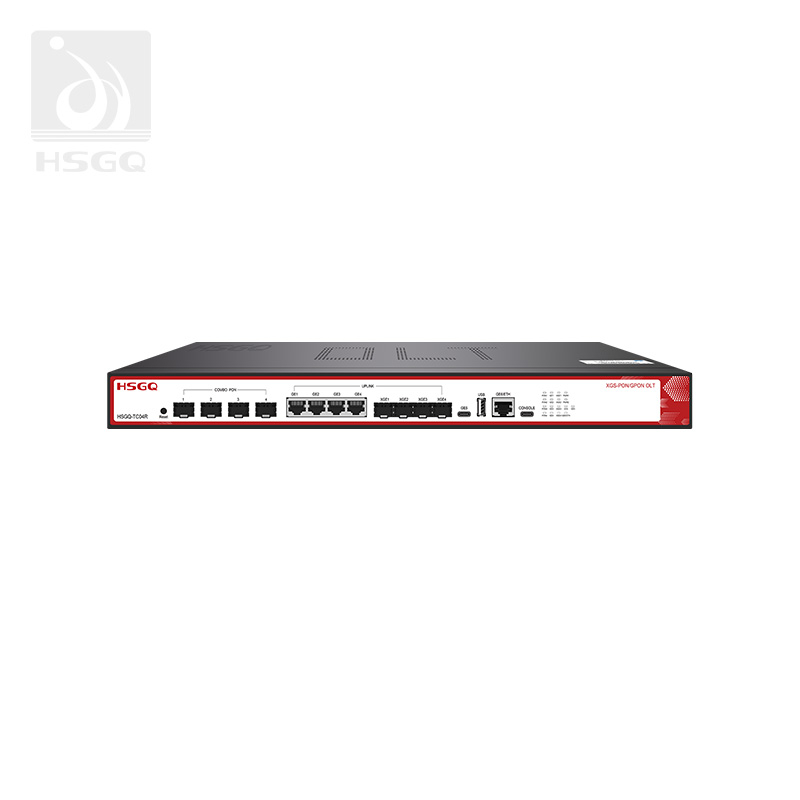
The table above highlights the stark differences in speed between GPON and XGS-PON, showcasing how XGS-PON can better cater to high-demand scenarios. HSGQ's XGS-PON OLT (Model: HSGQ-TC04R) exemplifies this capability, delivering high-speed performance that meets the needs of today's data-intensive applications. Users can benefit from its advanced features, ensuring a reliable and efficient network experience.
Bandwidth capacity is another critical area where XGS-PON shines compared to GPON. GPON networks typically support a maximum split ratio of 1:64, meaning they can efficiently serve a limited number of users without significant performance degradation. In contrast, XGS-PON can handle a split ratio of up to 1:128, allowing for greater scalability and accommodating more users simultaneously. This increased capacity is particularly beneficial in densely populated areas or during peak usage times.
The real-world implications of higher bandwidth in XGS-PON are substantial. For instance, businesses that rely on cloud-based applications can experience smoother operations and faster data transfers. Similarly, residential users can enjoy seamless streaming and online gaming experiences without buffering or interruptions.
● Smart Homes: With multiple devices connected, symmetrical speeds ensure that all devices function optimally without lag.
● Remote Work: High upload speeds support video conferencing and large file transfers, enhancing productivity.
● Educational Institutions: Schools can provide high-speed internet access for online classes and resources, benefiting both students and teachers.
In summary, XGS-PON's superior speed and bandwidth capacity make it a compelling choice for users and service providers looking to meet the demands of a rapidly evolving digital landscape. With solutions like the 4-port XGS-PON OLT from HSGQ, networks can be designed to handle future growth and increased data traffic efficiently.
Latency refers to the time it takes for data to travel from its source to its destination. In networking, low latency is crucial for ensuring smooth communication and quick response times. High latency can lead to delays that affect user experiences, particularly in applications requiring real-time interaction, such as online gaming, video conferencing, and streaming services.
When latency is low, users enjoy responsive applications, while high latency can result in frustrating delays, buffering issues, and overall dissatisfaction. Therefore, understanding latency differences between technologies like XGS-PON and GPON is essential for anyone looking to optimize their network performance.
GPON networks typically exhibit latency figures ranging from 10 to 30 milliseconds. While these numbers might seem acceptable for general browsing, they can pose challenges for more demanding applications. For instance, online gamers may experience lag, leading to a subpar gaming experience. Similarly, during peak hours, increased traffic can cause latency to rise even further, making it difficult for users to maintain stable connections.
● Online Gaming: High latency can lead to lag spikes, making competitive gaming frustrating.
● Video Conferencing: Delays can disrupt conversations, causing awkward pauses and misunderstandings.
● Streaming Services: Buffering due to latency can interrupt viewing experiences, leading to dissatisfaction.
In scenarios where real-time communication is essential, GPON may struggle to provide the performance users expect. This limitation highlights the need for technologies that can deliver lower latency.
In contrast, XGS-PON typically achieves latency figures between 1 to 10 milliseconds, significantly improving user experiences. This lower latency is particularly beneficial for applications requiring instant feedback, such as cloud-based virtual reality (VR) and high-definition video streaming. With these capabilities, XGS-PON can handle the demands of modern internet usage effectively.
● Cloud VR: Users can enjoy immersive experiences without noticeable delays, enhancing realism and engagement.
● 8K HD Video: Streaming high-definition content becomes seamless, providing viewers with uninterrupted experiences.
● Telemedicine: Healthcare providers can conduct remote consultations with minimal delay, improving patient care.
HSGQ's XGS-PON technology supports these low-latency applications, ensuring that users can take full advantage of high-speed internet. Their solutions, such as the black XGS-PON OLT, are designed to minimize latency, making them ideal for environments where every millisecond counts.
Technology | Typical Latency | Ideal Use Cases |
GPON | 10 - 30 ms | General browsing, basic streaming |
XGS-PON | 1 - 10 ms | Cloud VR, online gaming, 8K video |
This table illustrates the latency differences between GPON and XGS-PON, emphasizing the advantages of XGS-PON for applications that require quick response times. As digital demands continue to grow, technologies like XGS-PON provide the necessary infrastructure to support a faster, more reliable internet experience.
One of the most significant advantages of XGS-PON is its symmetrical speeds. Unlike GPON, which offers asymmetrical bandwidth, XGS-PON provides equal download and upload speeds, typically up to 10 Gbps in both directions. This feature is crucial for modern applications that require high-speed data transfer in both directions. For instance, activities like video conferencing, online gaming, and real-time collaboration tools benefit immensely from low latency and high upload speeds.
● Streaming Services: High-definition streaming requires robust bandwidth. Symmetrical speeds ensure smooth playback without buffering.
● Online Gaming: Gamers need low latency and fast upload speeds to enhance their experience and competitiveness.
● Cloud Computing: Businesses relying on cloud applications benefit from faster data uploads and downloads, improving productivity.
XGS-PON is designed with scalability in mind, making it an ideal choice for future growth. As demand for bandwidth increases, XGS-PON can easily scale to accommodate more users and higher data rates. It is compatible with existing GPON infrastructure, allowing service providers to upgrade their networks without a complete overhaul.
● 4-Port XGS-PON OLT: This solution allows providers to connect multiple users efficiently, enhancing overall network capacity.
● Flexible Architecture: XGS-PON supports various configurations, enabling tailored solutions for different environments.
HSGQ’s innovative approach to scalability in optical networks ensures that service providers can meet growing demands without compromising performance. Their products are built to adapt to changing technology landscapes, making them a smart investment for the future.
Effective network management is essential for Internet Service Providers (ISPs) to maintain high-quality service. XGS-PON offers advanced management features that surpass those of GPON. These features include real-time monitoring, automated troubleshooting, and improved analytics capabilities.
● Real-Time Monitoring: XGS-PON enables ISPs to monitor network performance continuously, allowing for quick identification of issues.
● Automated Troubleshooting: This reduces downtime and improves service reliability by addressing problems before they impact users.
● Data Analytics: Enhanced analytics provide insights into user behavior and network performance, helping ISPs optimize their services.
HSGQ has developed comprehensive management solutions for XGS-PON networks, ensuring that providers can efficiently manage their resources. Their tools help streamline operations, improve customer satisfaction, and ultimately drive business growth.
Feature | GPON | XGS-PON |
Speed Type | Asymmetrical | Symmetrical |
Scalability | Limited | Highly scalable |
Management Features | Basic monitoring | Advanced analytics & automation |
Ideal Applications | Basic internet usage | Streaming, gaming, cloud services |
This table summarizes the key advantages of XGS-PON over GPON, emphasizing its superior performance, scalability, and management capabilities. As technology continues to evolve, XGS-PON stands out as a robust solution for meeting the demands of today's digital landscape.

XGS-PON technology is paving the way for innovative applications across various sectors. Its high-speed, low-latency capabilities make it ideal for environments that demand robust connectivity. Here are some key use cases:
In smart industrial parks, XGS-PON facilitates seamless communication between devices, enabling real-time data transfer and automation. Businesses can monitor equipment remotely, optimize operations, and enhance productivity. The symmetrical speeds of XGS-PON support multiple applications simultaneously, ensuring that everything from IoT devices to video surveillance systems operates smoothly.
For residential settings, XGS-PON supports Fiber to the Room (FTTR) installations, providing high-speed internet access directly to every room in a house. This setup is particularly beneficial for households with multiple users engaging in bandwidth-intensive activities like streaming, gaming, and remote work. Families can enjoy uninterrupted connectivity, which is increasingly important in today’s digital age.
Telecom operators are evolving their networks to meet growing user demands. XGS-PON plays a crucial role in this transition, allowing operators to upgrade from GPON without extensive infrastructure changes. The technology's compatibility with existing GPON systems means operators can enhance their service offerings while minimizing costs.
HSGQ’s products, such as the 4-port XGS-PON OLT and black XGS-PON OLT, are tailored for these applications. These devices provide the necessary bandwidth and management features to support diverse environments, making them perfect for both commercial and residential use.
Real-world implementations of XGS-PON technology showcase its effectiveness in enhancing speed and reducing latency. Here are a few notable examples:
● Smart Industrial Park in Shenzhen: One of HSGQ’s clients implemented XGS-PON across their industrial park, resulting in a 70% reduction in latency and a 200% increase in data transfer speeds. This upgrade allowed for improved automation and real-time monitoring of machinery.
● Residential Community in Beijing: A new residential complex adopted FTTR using HSGQ’s XGS-PON solutions. Residents reported significantly faster internet speeds, with 95% of users stating they experienced no buffering during streaming or gaming sessions.
"Since implementing HSGQ's XGS-PON technology, our operational efficiency has skyrocketed. The ability to monitor our systems in real-time has transformed our business." – Operations Manager, Shenzhen Industrial Park
"The internet speed in our new home is incredible! Streaming and gaming are seamless, and we couldn't be happier." – Resident, Beijing Community
Application Type | Example Implementation | Speed Improvement | Latency Reduction |
Smart Industrial Parks | Shenzhen Industrial Park | 200% increase | 70% reduction |
Residential FTTR | Beijing Residential Community | Significant increase | Minimal latency |
These examples illustrate how XGS-PON technology is not just a theoretical improvement but a practical solution that enhances user experiences across various applications. HSGQ’s commitment to quality and innovation ensures that their clients can fully leverage the benefits of XGS-PON technology.
In summary, XGS-PON offers significant advantages over GPON in speed and latency. Its symmetrical speeds enhance user experiences, especially for streaming and gaming. Additionally, XGS-PON supports scalability, making it ideal for future network demands.
Choosing the right technology is crucial for meeting specific needs. For those looking to future-proof their networks, XGS-PON is an excellent option. HSGQ stands out as a reliable provider of XGS-PON solutions, ensuring high performance and efficiency.
A: XGS-PON offers symmetrical speeds of up to 10 Gbps, while GPON provides asymmetrical speeds of 2.5 Gbps downstream and 1.25 Gbps upstream.
A: Yes, XGS-PON can coexist with GPON, allowing operators to upgrade networks without complete infrastructure changes.
A: The black XGS-PON OLT provides enhanced performance, scalability, and advanced management features for efficient network operation.
A: The 4-port XGS-PON OLT allows multiple users to connect simultaneously, increasing overall bandwidth and reducing latency.
A: SFP+ modules enable high-speed data transmission in XGS-PON, supporting flexible and efficient network configurations.